Riccione is often remembered for its sea, but anyone who decides to tackle the Cippo Carpegna climb by bike soon discovers that the coast is only a part of the experience.
You just need to leave the Riviera behind and head into the hinterland to completely change the scenery: the Valconca, Montefeltro, Carpegna, the Cippo, and San Marino. In just over a hundred kilometers, you cross diverse territories with challenging climbs, villages nestled on the hills, and roads climbing up towards the Apennines.
The Giro del Fungo Porcino from Riccione to the Cippo is one of the itineraries that best showcases this variety. It is one of the most interesting routes for those who love venturing out to discover a surprising territory, featuring a loop that nevertheless requires good fitness and solid training.
An itinerary that is indeed demanding, but once the fatigue is overcome, it has plenty of rewards to offer.
- From Riccione to the hinterland: the advantage of starting directly from the sea
- The route in brief
- The ride begins: into the hinterland between Valconca and Montefeltro
- Why is it called Giro del Fungo Porcino?
- Carpegna by bike: the Apennine heart of the route
- The Cippo Carpegna by bike: why this climb matters to cycling lovers
- San Marino: passing through the ancient Republic before returning to the sea
- Why tackle the Cippo Carpegna by bike starting from a Riccione Bike Hotel
- Organize your bike holiday in Riccione
From Riccione to the hinterland: the advantage of starting directly from the sea
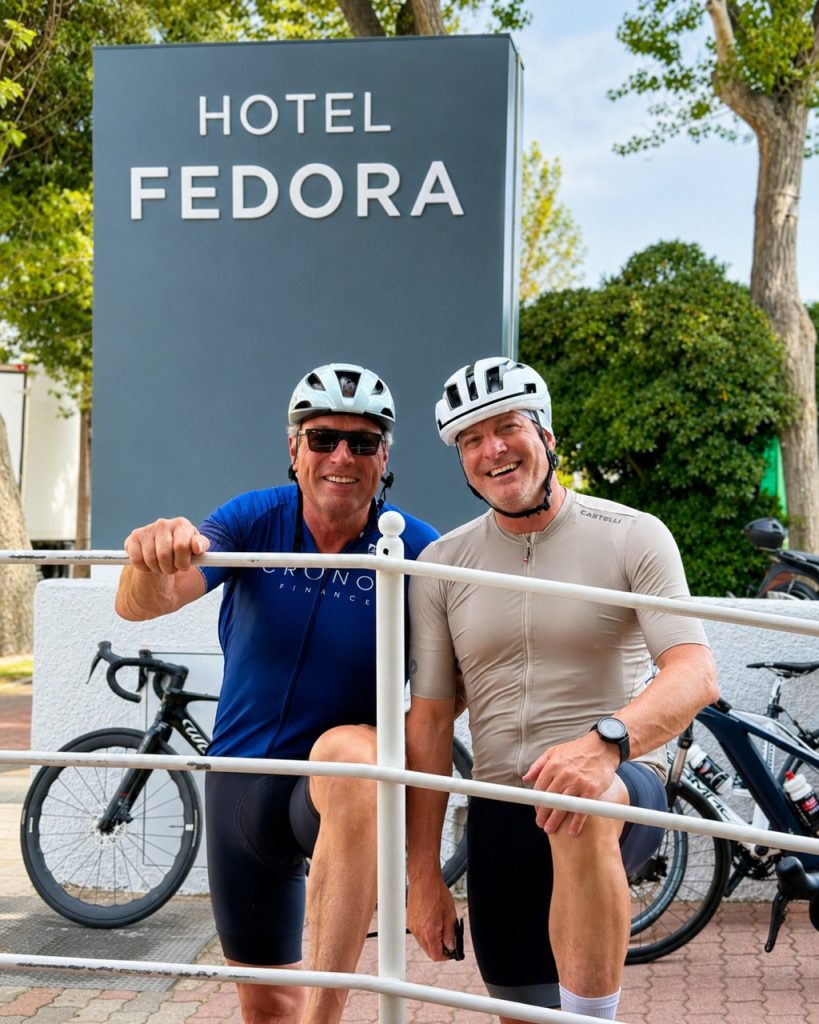
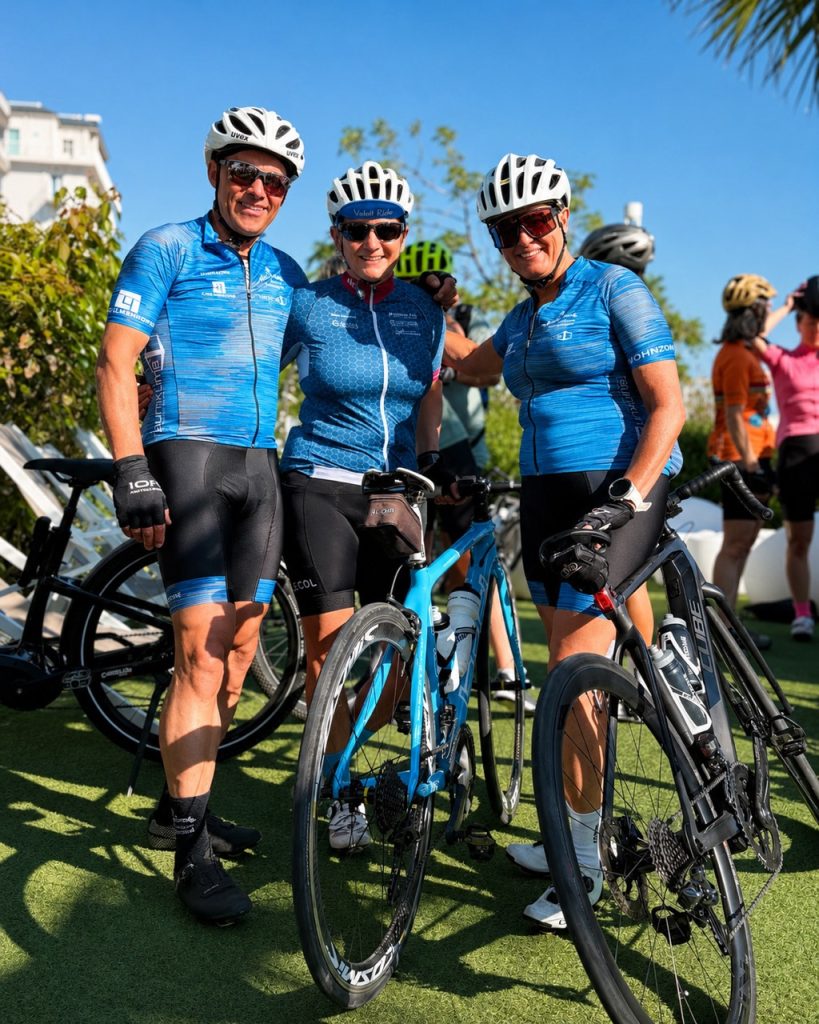
One of the strengths of Riccione, for those who ride, is the possibility to start directly from the sea of the Riviera Adriatica and find yourself in a short time on roads that are very different from those on the coast.
There is no need to organize transfers or pack your bike into a car. You simply step out of the hotel, leave the city behind, and start climbing inland. This is convenient, but above all practical, because it allows you to build long and varied rides while keeping Riccione as both your starting and return point.
The Giro del Fungo Porcino from Riccione to the Cippo di Carpegna by bike takes full advantage of this feature. It starts in a setting equipped with all the services of the Riviera Romagnola, and then leads towards a backcountry that is very different from the most immediate image of the coast.
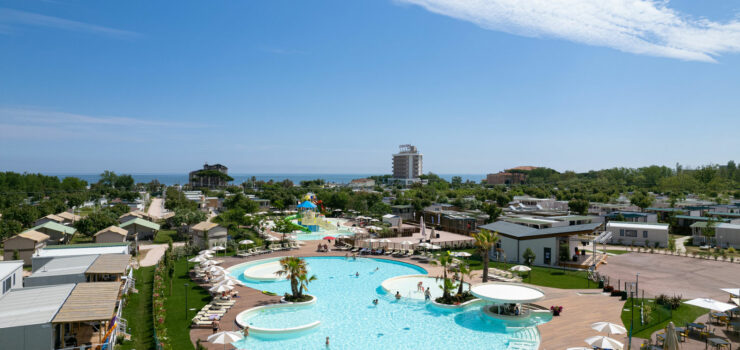
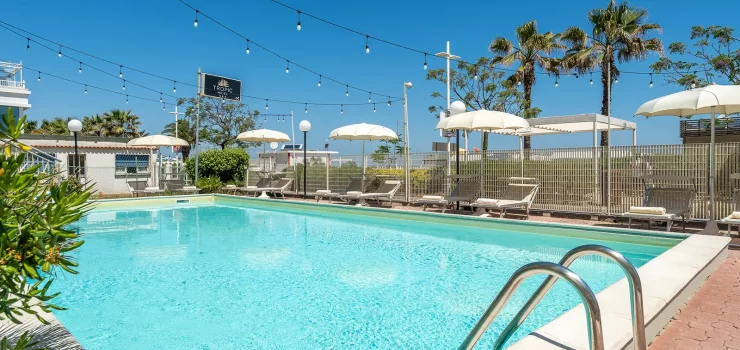
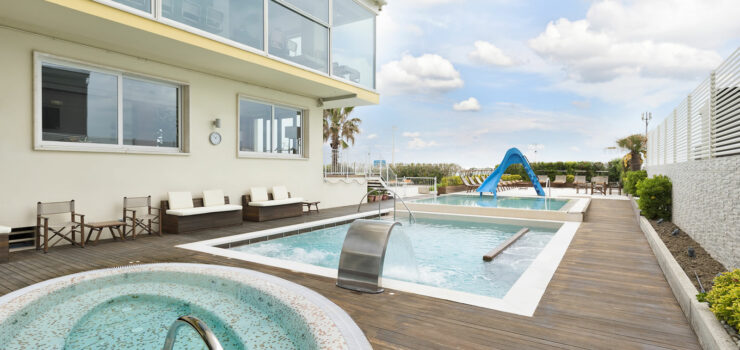
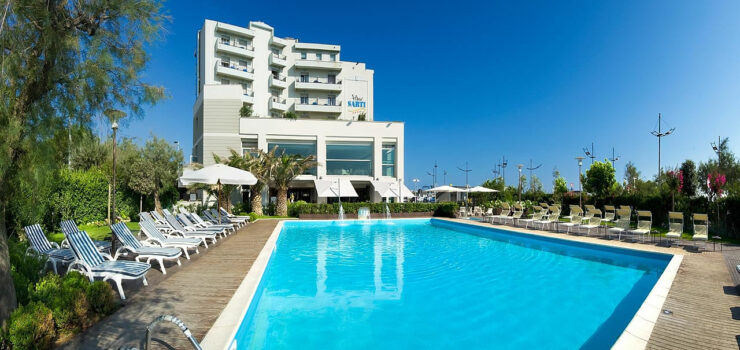
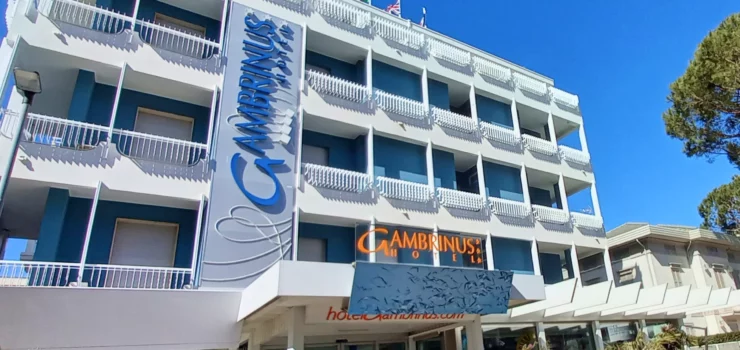
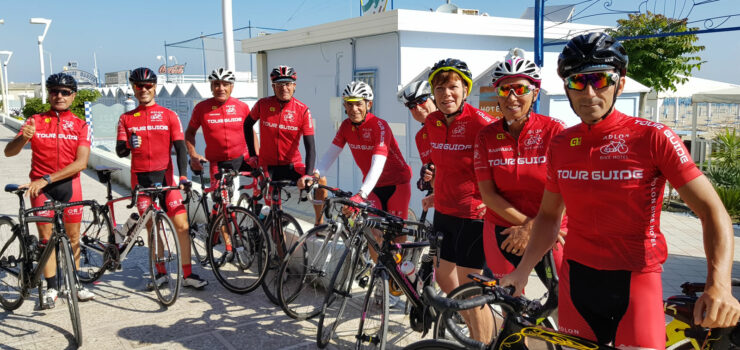
For those staying at a Riccione Bike Hotel, this turns into a tangible advantage: your bike is ready, the GPX track can be loaded before departure, and you can choose to ride independently or join organized group rides with the Riccione Bike Hotels guides. And upon your return, you come back to a facility well-accustomed to welcoming cyclists after long days, with everything you need to recover and prepare for the next ride.
The route in brief
The Giro del Fungo Porcino from Riccione to the Cippo di Carpegna by bike is an itinerary designed mainly for road bikes, but it can also be tackled on a gravel bike or an e-bike. This route is recommended for trained cyclists who are well-accustomed to managing significant climbs and distances.
The route covers a distance of 115 km with a positive elevation gain of approximately 2,000 m, passing through Valconca, Monte Cerignone, Carpegna, the Cippo di Carpegna, and returning via Montelicciano, San Marino, Montegiardino, and finally through the Marano Valley.
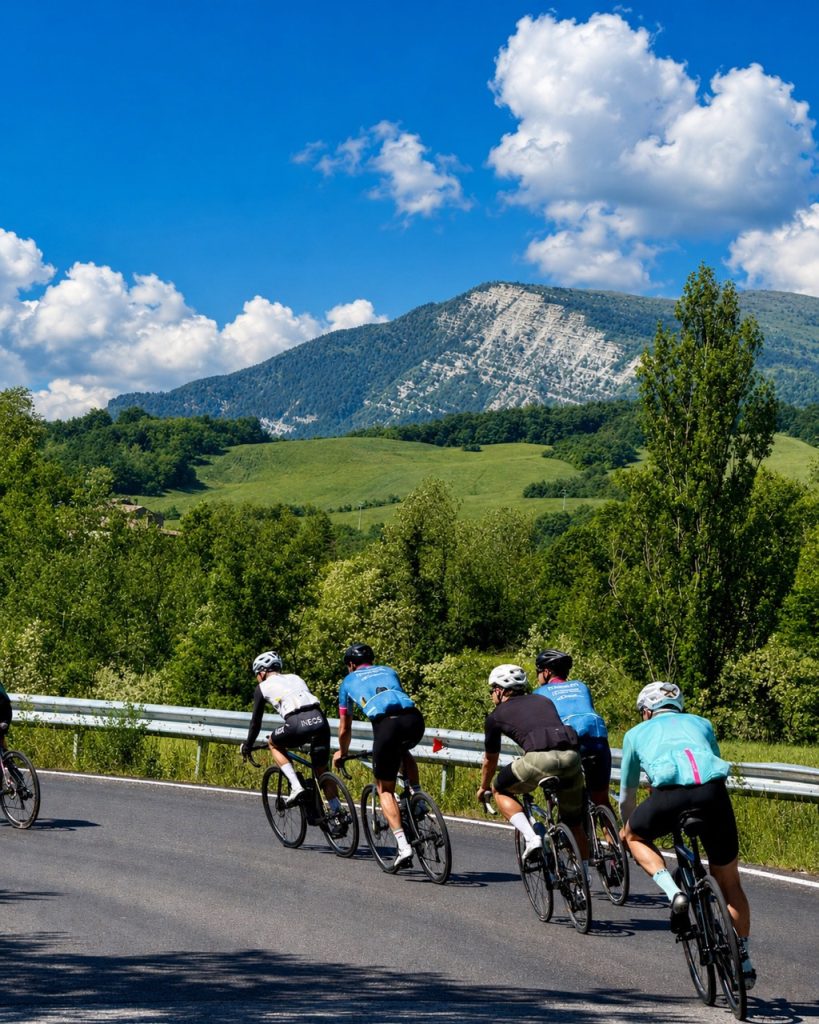
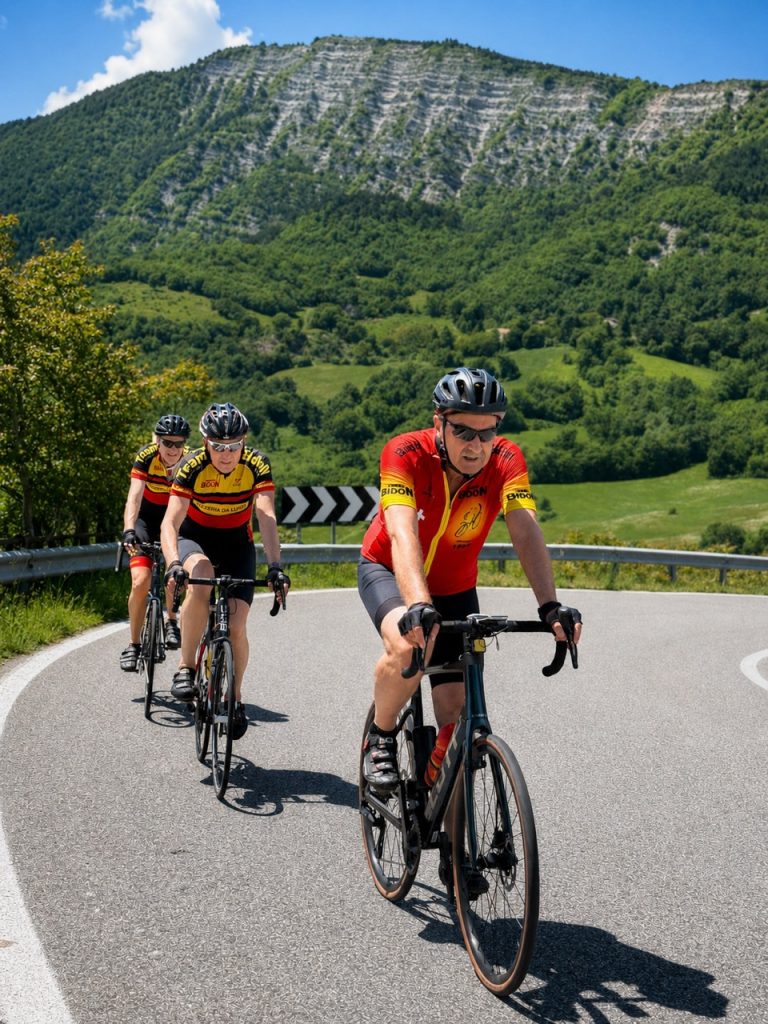
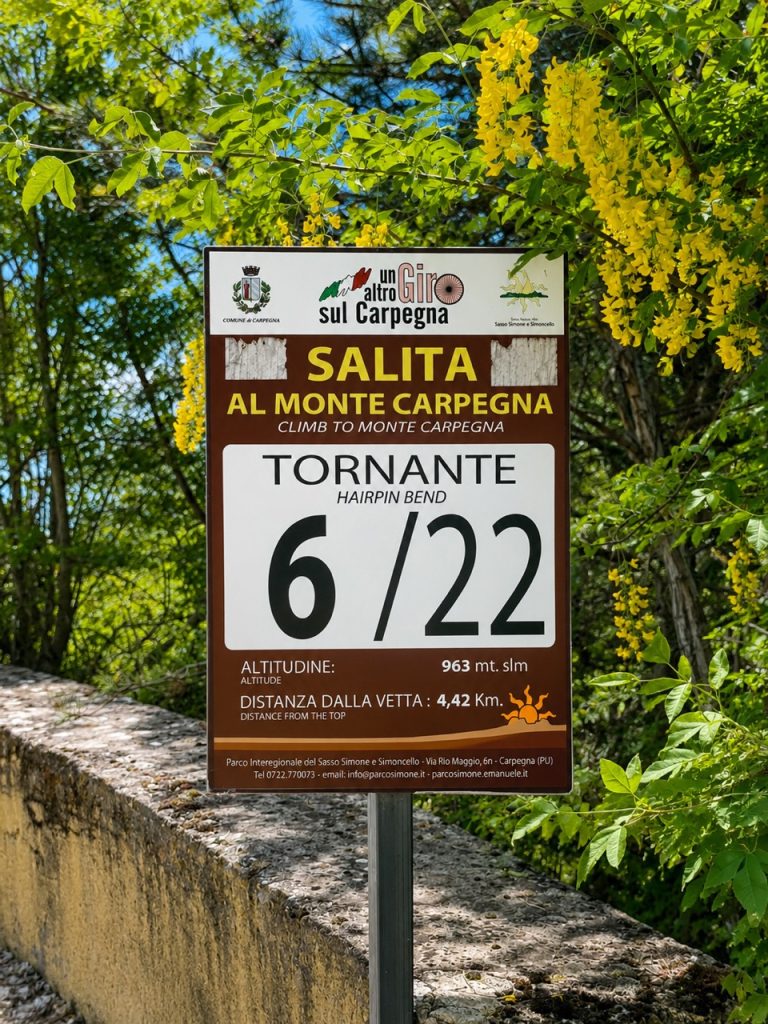
On this ride, the ascent towards the Cippo must be kept firmly in mind, because you are not facing just any ordinary climb. In fact, from the village of Carpegna, the road climbs for about 6 km with average gradients around 10% and peaks touching 18%: steep ramps that require strong legs, patience, and mental clarity.
In this single section alone, you gain 660 meters of positive elevation. It is not as long an ascent as the great Alpine passes, but it concentrates a remarkable toughness into just a few kilometers.
The ride begins: into the hinterland between Valconca and Montefeltro
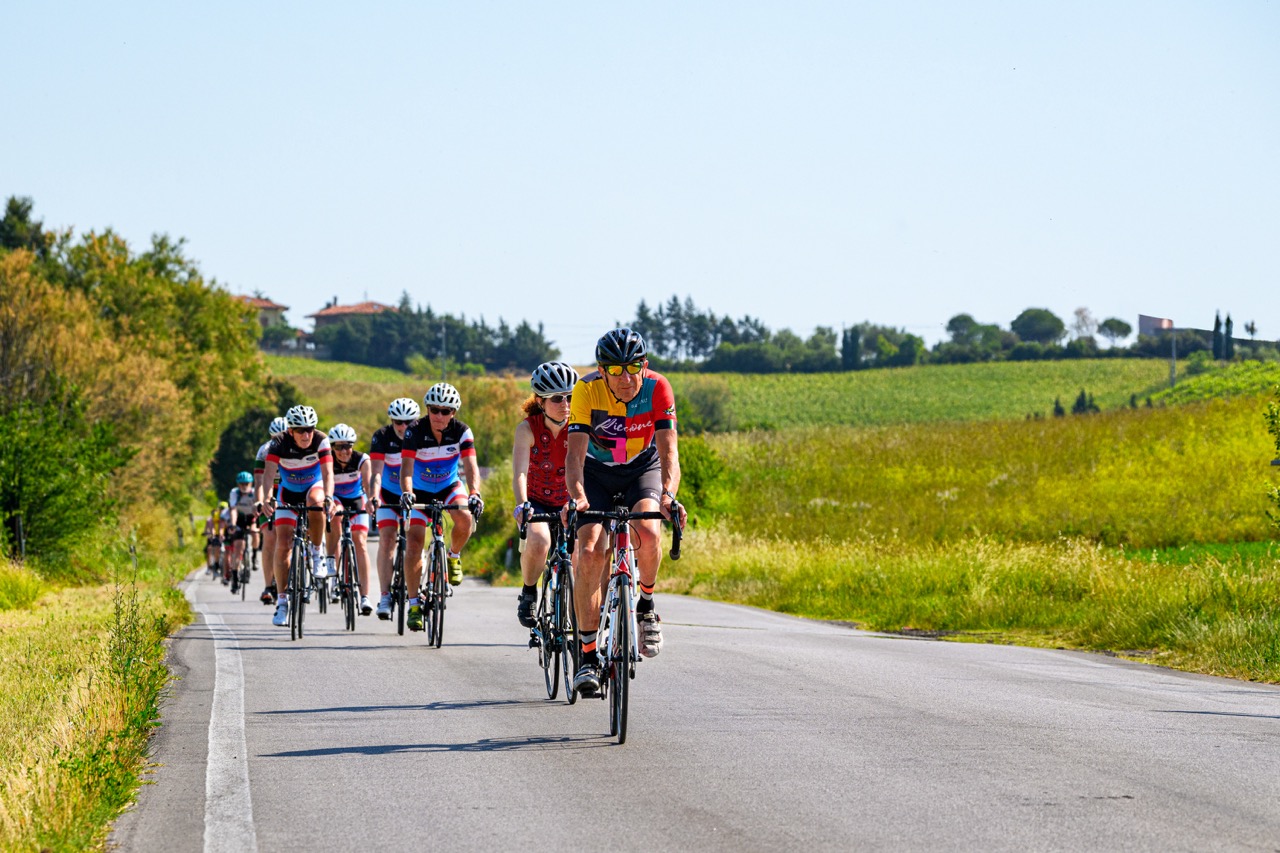
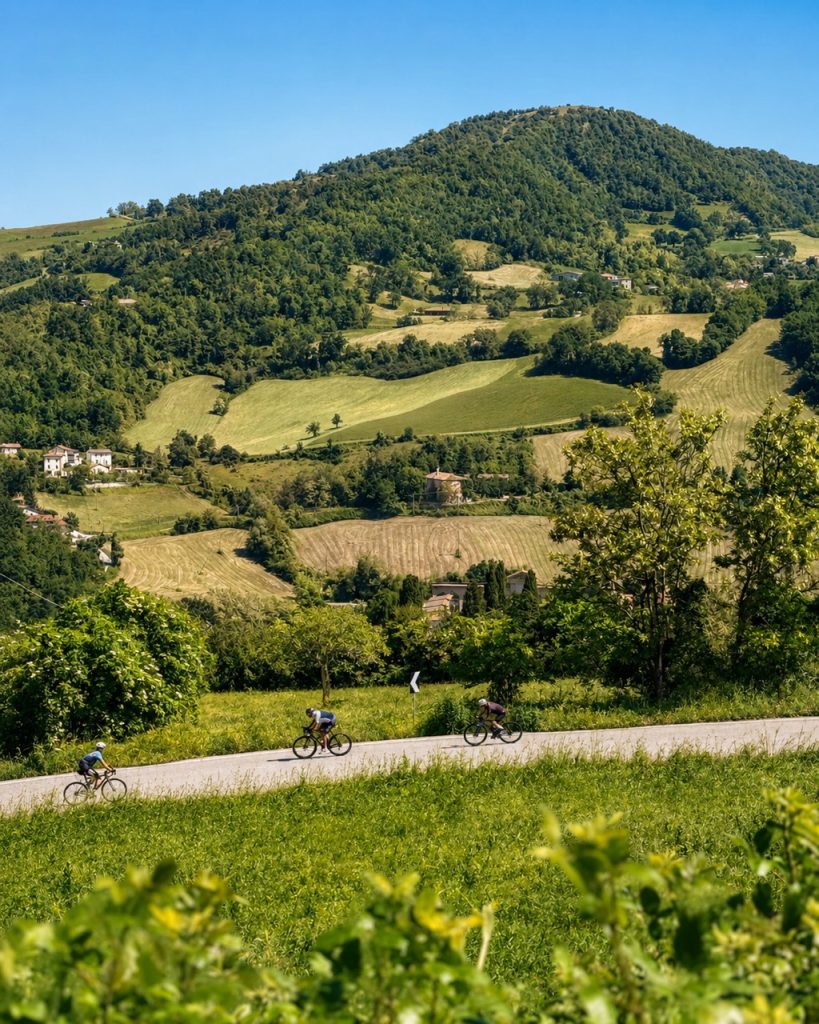
The first part of the route leaves Riccione, in the heart of the Riviera Romagnola, and heads towards the Valconca, the valley of the Conca river, one of the natural routes to enter the hinterland starting from the Riviera Adriatica.
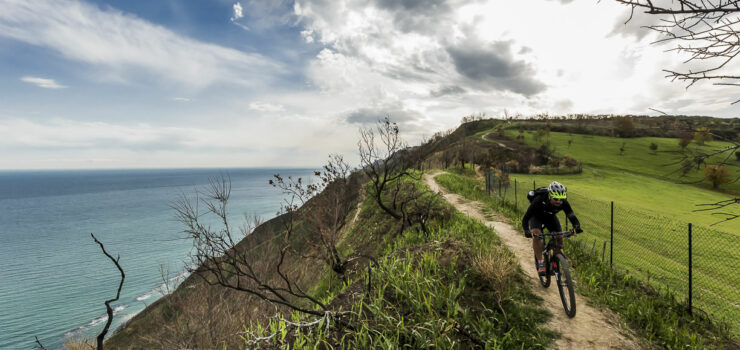
It is a transit zone, and for this very reason, it is perfect for starting to warm up your legs in high cadence before the climbs. The road follows the inland route, crossing an agricultural and hilly landscape, with the sea left behind and the Apennines beginning to draw closer, becoming the scenic reference point of the day.
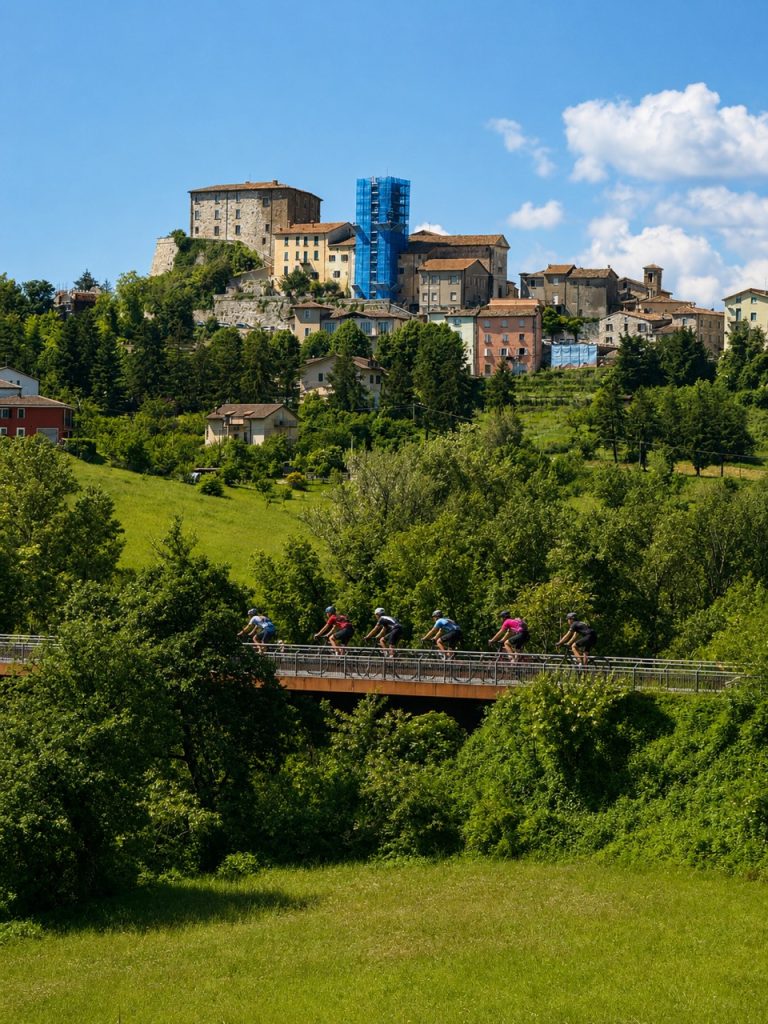
Passing below Monte Grimano and then towards Monte Cerignone brings the ride into the Montefeltro, a historical territory straddling Romagna, Marche, and San Marino. It is not a sharp border, but rather an area with a highly recognizable identity, dense with small villages, ridges, and fortresses that recall a past full of history.
Monte Cerignone deserves at least a glance, even if you pass through without stopping. It is a hamlet of the upper Conca valley, with a lower part near the river and the historical core gathered around the Rocca Feltresca, on a tuff cliff. For those who ride, it is one of those places that help you understand where you are: no longer the Riviera, not yet in Carpegna, but already fully inside the Montefeltro.
Why is it called Giro del Fungo Porcino?
The name of the itinerary evokes an imagery linked to the land and tradition. In the Montefeltro region, this name was born informally among local operators, associating the ride with one of the territory’s strongest symbols.
The dense limestone woods surrounding the Monte Carpegna massif are, in fact, historical areas for gathering wild porcini mushrooms and prized truffles. This is a local treasure, protected by the Mountain Union, which speaks of a backcountry very different from the coastal one.
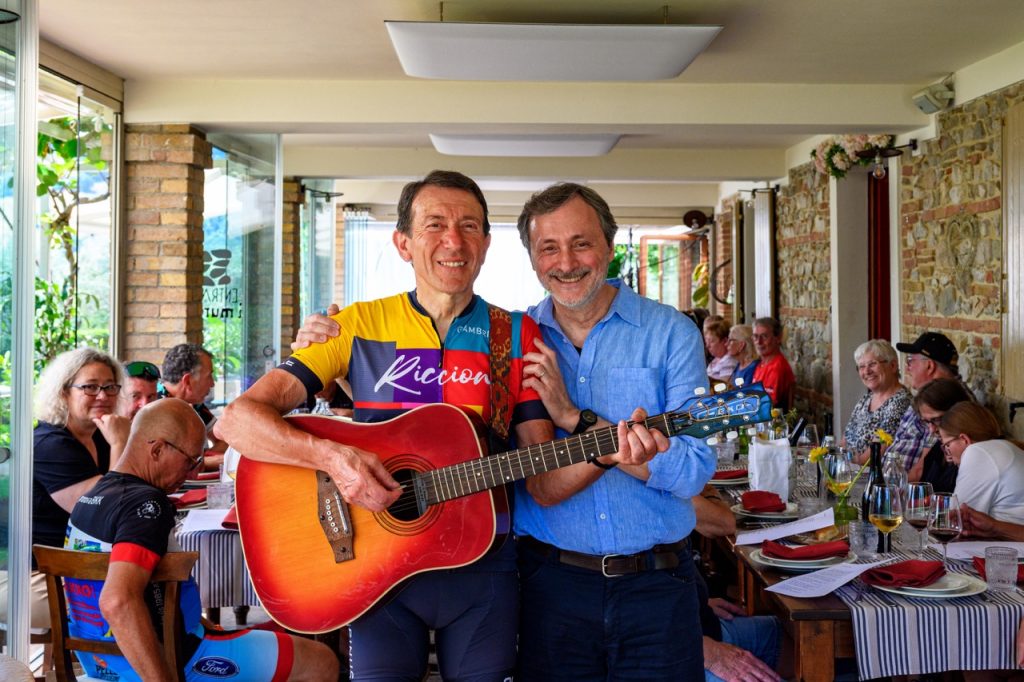
For those on a bike, this route thus becomes an ideal connection between the effort of the Apennine climb and the local cuisine. A challenge in the saddle where, at the end of the day, the porcini mushroom and Prosciutto di Carpegna DOP transform into the perfect specialties to recover your energy and discover the traditional flavors of the undergrowth.
Carpegna by bike: the Apennine heart of the route
Carpegna is the point where the itinerary enters another dimension: geographical, cycling-focused, and also symbolic.
Arriving here from Riccione means you have already left the Riviera far behind. Here, the route makes its way through a more Apennine territory, with a different mountain presence and a cycling history that weighs more than mere numbers.
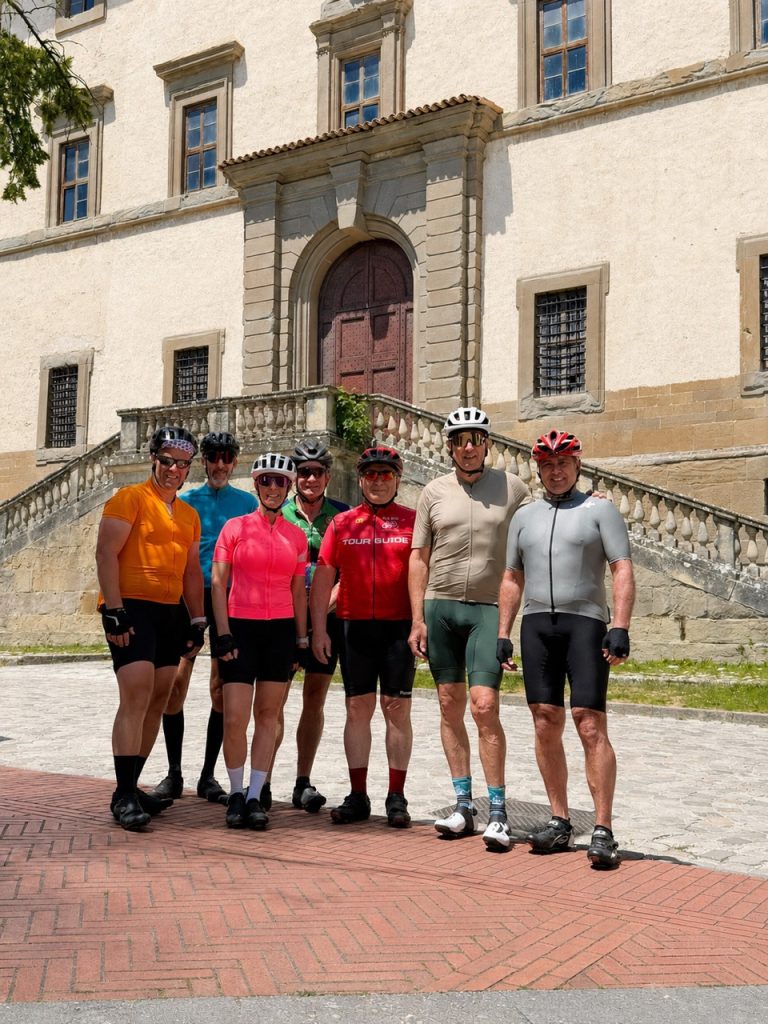
Carpegna is located in the Marche region’s Montefeltro, right at the foot of the Monte Carpegna massif. It is a small village, but for those who ride a bike, it holds a massive name. This is where the climb leading towards the Cippo Carpegna begins.
The town also holds a strong historical memory. During World War II, thousands of masterpieces of Italian art were hidden in the Palazzo dei Principi di Carpegna, thanks to the operation led by Pasquale Rotondi. Here, you cross a place that silently safeguarded an important part of the Italian heritage.
For cyclists, however, Carpegna is above all the gateway to Monte Carpegna. From here, the loop enters its most anticipated phase—the one that many riders have in mind even before setting off from Riccione.
The Cippo Carpegna by bike: why this climb matters to cycling lovers
The Cippo Carpegna is the most symbolic point of the route.
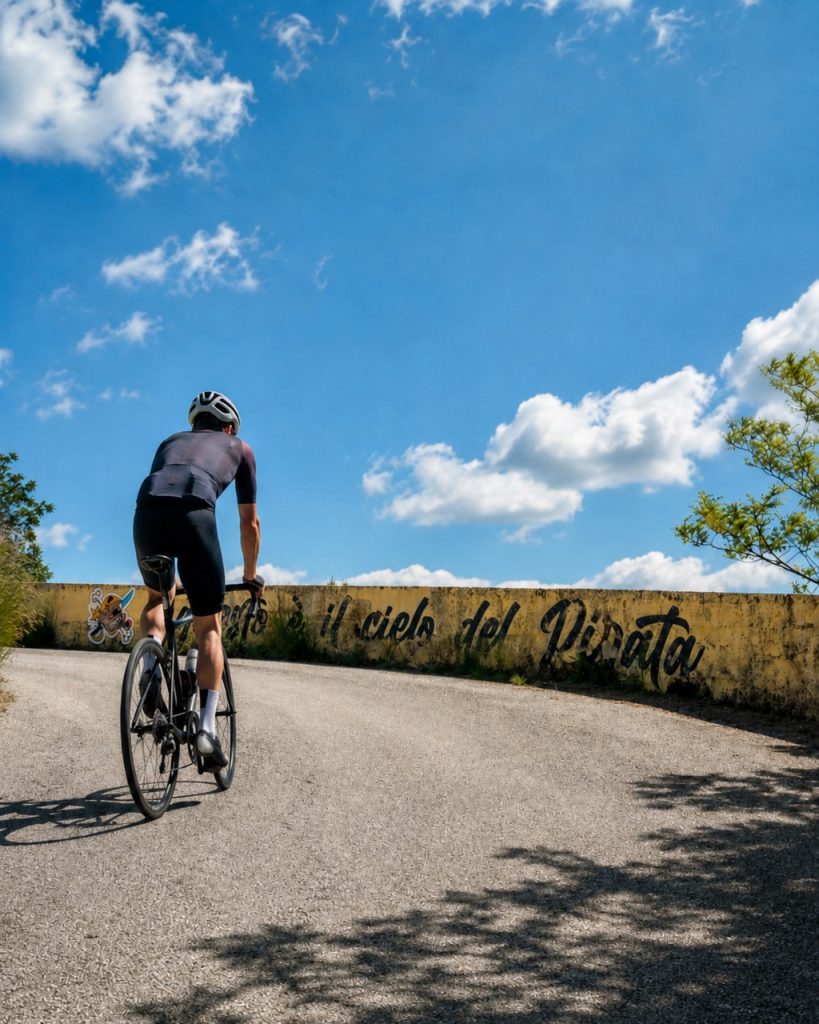
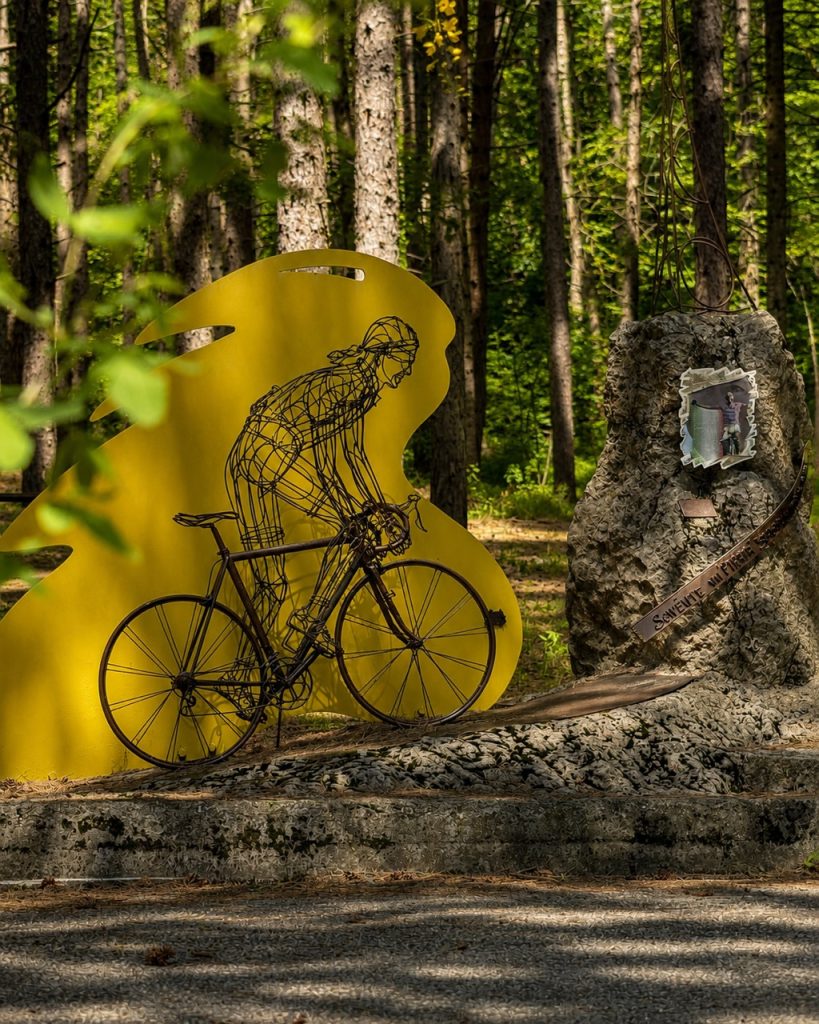
It is not famous because it is incredibly long. It is famous because it is tough, iconic, and deeply tied to the figure of Marco Pantani. The phrase “Il Carpegna mi basta” (Carpegna is enough for me) has become one of the most frequently quoted when talking about this climb, and it still holds true because it perfectly describes the relationship between “Il Pirata” (The Pirate) and these roads.
For him, the Carpegna meant training, exhaustion, repetition, hard work. A nearby climb, harsh and sufficient to truly test oneself.
The Cippo is also a specific place: the pine forest, the Cippo locality, the graffiti on the asphalt, the memory of the Pirate, and the Passo Marco Pantani, officially established in 2023. These elements have transformed this climb into a legendary destination for both Italian and foreign cyclists.
Even a technical detail such as the gear ratios used by Pantani on the Carpegna Cippo, often remembered as 39×19 or 39×21, serves a narrative purpose. It is not an invitation to make comparisons, nor is it gear advice for those tackling the climb today. It is a mark of history, showing how it continues to passion and inspire everyone who arrives here wishing to conquer this ascent and keep the Pirate’s dream alive.
San Marino: passing through the ancient Republic before returning to the sea
After Carpegna and the Cippo, the Giro del Fungo Porcino does not opt for an anonymous return route.
The track descends once again towards Monte Cerignone and then joins the road leading to San Marino, tackling the Montelicciano ascent, touching Montegiardino, and finally dropping down towards Faetano.
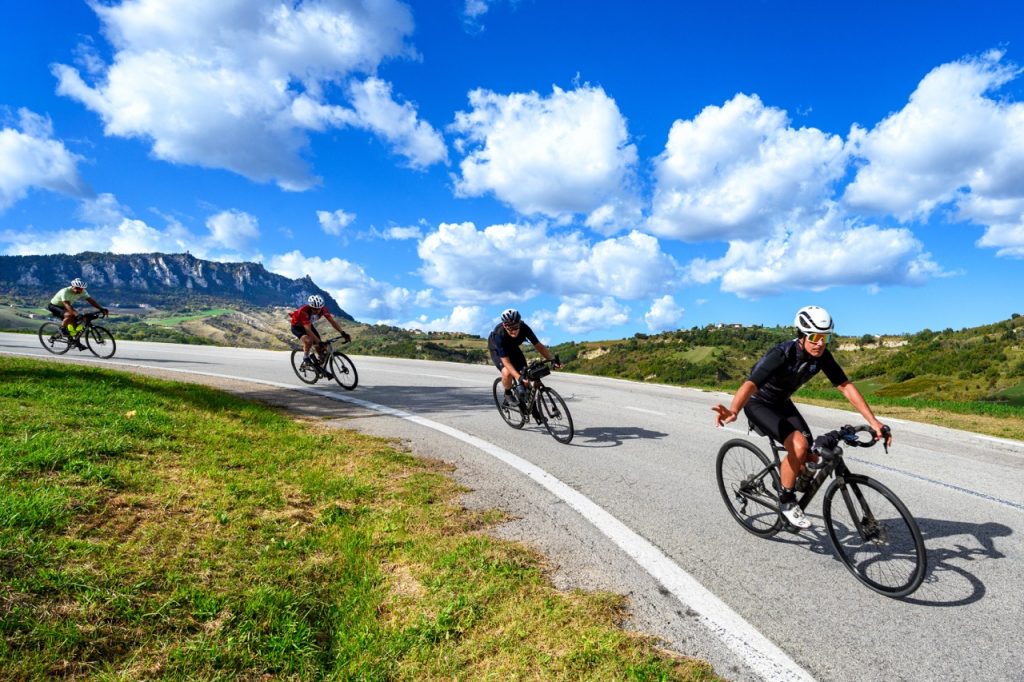
Passing through San Marino adds something truly unique. On this ride, you do not even need to enter the historic center to feel its value: simply crossing the territory of the ancient Republic with Monte Titano behind you is enough before gradually finding your way back to the coast.
The historic center of San Marino and Monte Titano are a UNESCO World Heritage Site. After Carpegna, the route passes through a sovereign territory and then descends towards the valley of the Parco Fluviale del Marano, with Riccione progressively reappearing as the final arrival point.
There is also a recent detail that interests those who follow professional cycling: the 2024 Tour de France, during the Florence-Rimini stage, also passed through San Marino, bringing renewed attention to these roads and leaving a fresh sporting mark on a territory already rich in cycling history.
Why tackle the Cippo Carpegna by bike starting from a Riccione Bike Hotel
The Giro del Fungo Porcino demonstrates in a very practical way what Riccione can offer to a dedicated road cyclist.
Starting from Riccione, you can build an itinerary that crosses Romagna, Marche, and San Marino, climbs towards Monte Carpegna, touches the most iconic ascent tied to Pantani and the history of world cycling, and returns via the Marano valley.
This variety is the real strength.
Riccione allows you to bring together two aspects that are highly important for a cyclist on holiday: convenience of the base and quality of the routes. You sleep by the sea, ride towards the hinterland, and starting from a comfortable, flat location, you can reach proper climbs. All without having to organize transfers or change your destination.
Starting from a Riccione Bike Hotel
On a route like this, the facility you start from matters.
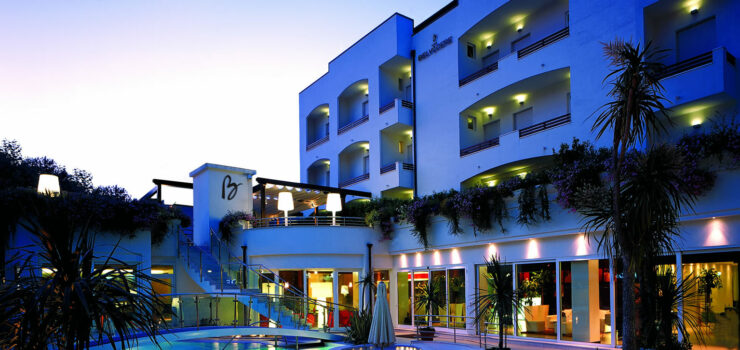
A Riccione Bike Hotel doesn’t change the toughness of the Cippo, but it simplifies everything surrounding your day. The GPX track, the bike, the scheduling, breakfast, recovery, and route advice: these are details that become crucial when tackling a long and demanding ride.
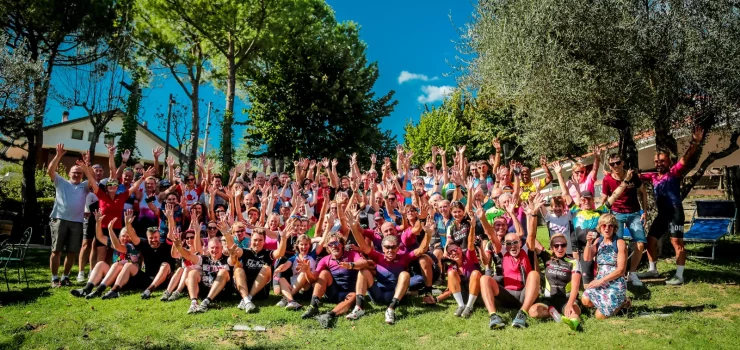
For a solo cyclist, it means setting off with fewer worries. For a group, it means having an organized base, dedicated services, and a reliable point of reference before and after the ride.
The value isn’t just in the comfort. It lies in the possibility of experiencing the ride as a natural part of the holiday, rather than a challenge that needs to be assembled piece by piece.

Organize your bike holiday in Riccione
If you want to face this challenge and discover all the other itineraries in Romagna and Montefeltro, organize your holiday at the Riccione Bike Hotels: in the dedicated section of our website, you will find all the tracks for road or gravel rides, services tailored for cyclists, and the best facilities ready to welcome you.
For the Giro del Fungo Porcino to the Cippo di Carpegna by bike, visit the official page riccionebikehotels.it/percorsi, download the GPX track, and prepare for your next ride.
Because a bike holiday in Riccione doesn’t end on the coast. From here, the road can take you much further.